Legacy Software Evaluation for Airlines
Assess, optimise, or replace legacy systems with confidence — modernise without disruption.
Airlines rely on complex IT environments made up of legacy systems that were often developed decades ago. While many of these platforms remain functional, they can become costly to maintain, difficult to scale, and incompatible with modern integrations.
At Dalmatian Group, we help airlines evaluate the performance, security, and cost-effectiveness of their existing software stack. Our Legacy Software Evaluation service is designed to guide smart decision-making — whether you’re optimising your current infrastructure, preparing for a digital overhaul, or looking to adopt cutting-edge platforms like blockchain or AI.

Why Legacy Evaluation Matters
Outdated systems may seem “good enough,” but they can quietly erode profitability, performance, and agility. Common issues include:
- High maintenance costs and reliance on ageing tech staff
- Poor user experience and slow system response times
- Compatibility issues with APIs, GDSs, and third-party services
- Data silos that hinder decision-making
- Security vulnerabilities and compliance risks
Dalmatian Group helps identify which systems still add value, which need upgrading, and which should be retired or replaced.
Key Evaluation Areas
1. Functionality & Fit
We assess whether the legacy software still supports your airline’s operational and commercial needs.
- Core functionality vs. current business requirements
- Workflow bottlenecks
- Limitations in scalability or customisation
- Mobile and cloud-readiness
2. Technical Architecture
We review the system’s underlying technology to assess longevity, performance, and integration feasibility.
- Language, database, and infrastructure stack
- System documentation and code maintainability
- Dependency mapping
- API and interoperability readiness

3. Security & Compliance
Older systems are frequently out of step with today’s cybersecurity expectations and regulatory obligations (e.g., GDPR, PCI-DSS, UK data protection law).
- Encryption protocols
- Access controls and audit logs
- Security patch history
- Data residency and retention compliance
4. Total Cost of Ownership (TCO)
Understanding the full cost of a legacy system — including licensing, hosting, support, and opportunity cost — is essential.
- Direct vs indirect operating costs
- Support and vendor dependency
- Downtime or reliability issues
- Opportunity costs from lack of integration
Our Evaluation Process
We tailor our review process based on system size, function, and business priorities.
Phase 1: Discovery & Stakeholder Interviews
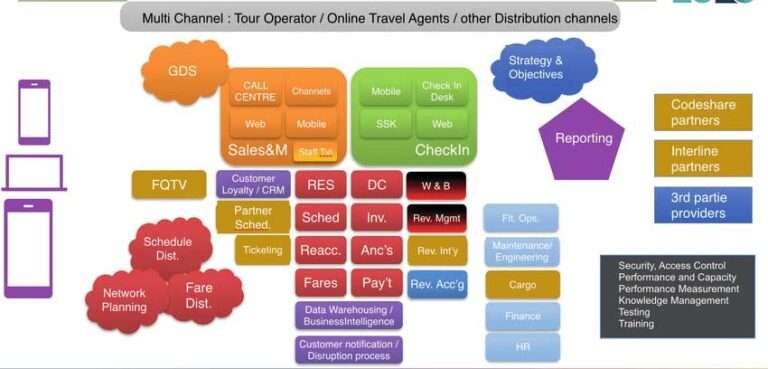
- Identify core systems in use (e.g., MRO, DCS, PSS, loyalty programs)
- Interview users, IT admins, and vendor partners
- Understand usage, frustrations, and manual workarounds
Phase 2: System & Code Review
- Deep-dive into platform architecture and codebase
- Security audit
- Integration mapping and technical debt scoring
Phase 3: Business Impact Assessment
- Align technology performance with business strategy
- Cost-benefit analysis of retention vs. replacement
- Identify where legacy systems constrain growth or compliance
Phase 4: Recommendations & Roadmap
- Retire, refactor, or replace systems based on findings
- Create a step-by-step transition plan
- Align with cloud, blockchain, or Web3 adoption goals
Typical Airline Systems We Evaluate
- Passenger Service Systems (PSS)
- Revenue Management and Pricing Engines
- Flight Planning and Scheduling Tools
- Crew Management Software
- Loyalty Program Platforms
- In-House Maintenance or Fuel Tracking Systems
When to Evaluate Legacy Software
- Declining performance or frequent outages
- Key knowledge is held by near-retirement staff
- Incompatibility with modern APIs or blockchain
- Preparing for M&A or regulatory audits
- Planning digital transformation or cloud migration
Case Study: Cost Reduction through Consolidation
An LCC operating in Eastern Europe had over 17 standalone tools managing scheduling, MRO, catering, and payroll. Dalmatian Group conducted a comprehensive review.
Findings:
- Four systems were redundant
- Vendor lock-in was inflating annual costs by 32%
- Data duplication was creating regulatory risks
Solution:
- Retired non-critical systems
- Integrated three key platforms through APIs
- Proposed blockchain framework for MRO and payroll traceability
Outcome:
- Saved £1.1M annually
- Cut IT incident response time by 45%
- Improved data consistency across departments
Why Work with Dalmatian Group?
- Aviation Sector Focus – We know airline operations and how software supports them
- Tech-agnostic Advisory – We don’t sell software, so our advice is unbiased
- Smooth Transition Planning – We help you replace legacy systems without disrupting flight ops
- Blockchain Integration Expertise – Legacy evaluation often feeds into next-gen solutions
Let’s Future-Proof Your Software Stack
Don’t let legacy systems hold your airline back. Evaluate, consolidate, and modernise with confidence.