Blockchain Solutions for Airlines
A secure, unified platform to simplify operations, reduce vendor fragmentation, and future-proof your digital infrastructure.
The airline industry relies on dozens — sometimes hundreds — of software systems to manage everything from passenger bookings and crew scheduling to aircraft maintenance and loyalty programs. These systems are often developed by multiple vendors, leading to silos, inefficiencies, and security vulnerabilities.
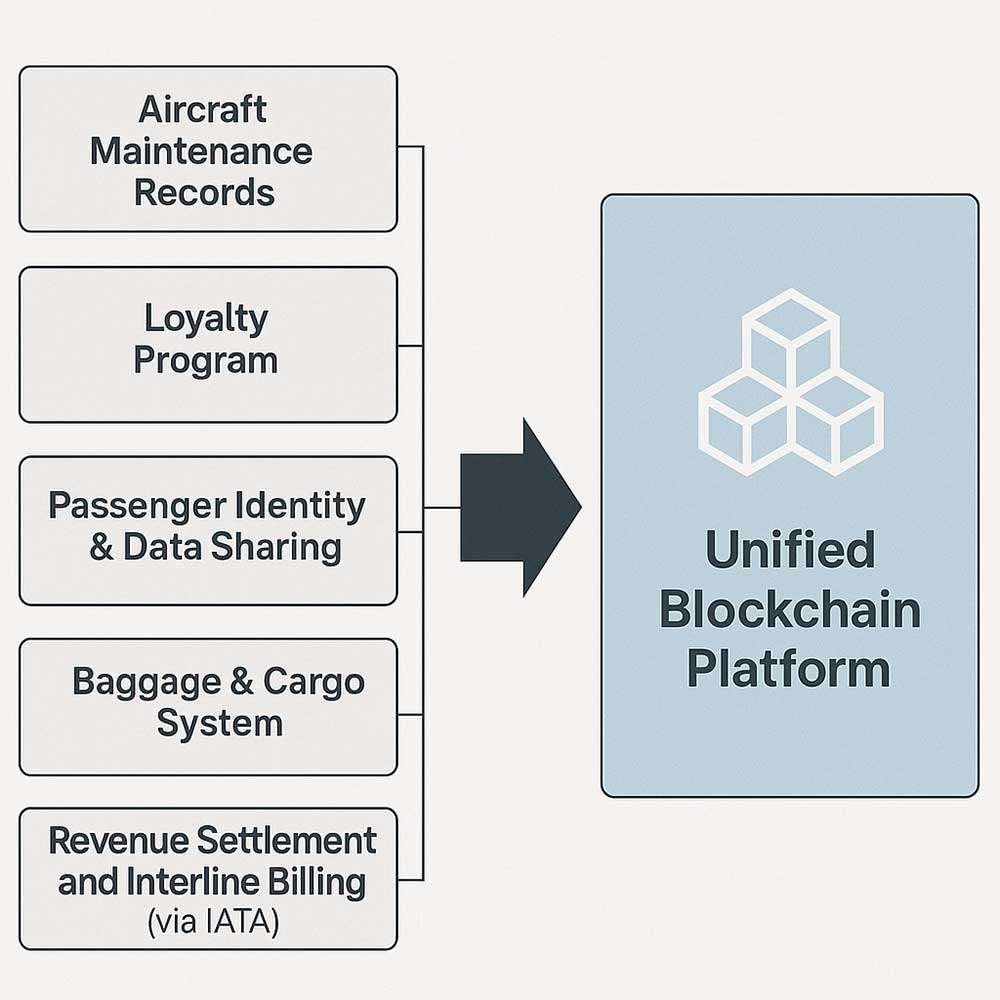
Blockchain technology offers a powerful alternative: a decentralised, secure, and tamper-proof platform capable of consolidating airline processes into a single source of truth. Dalmatian Group specialises in Blockchain Software Consulting for the aviation sector, enabling airlines to modernise their architecture, eliminate redundancy, and unlock new levels of automation.
Why Blockchain for Airlines?
Blockchain isn’t just a buzzword — it’s a foundational shift in how information is stored, shared, and verified. For airlines, the benefits are both strategic and operational:
- Vendor Consolidation – Integrate legacy tools and vendor solutions into one interoperable system
- Data Integrity – Every action is time-stamped, immutable, and verified across nodes
- Enhanced Security – End-to-end encryption protects sensitive data from cyberattacks
- Automation through Smart Contracts – Trigger actions automatically (e.g. refunds, cargo clearance, loyalty redemptions)
- Real-Time Collaboration – Ground staff, air crew, regulators, and suppliers access a shared truth in real time
Fragmented Systems, Centralised Vision
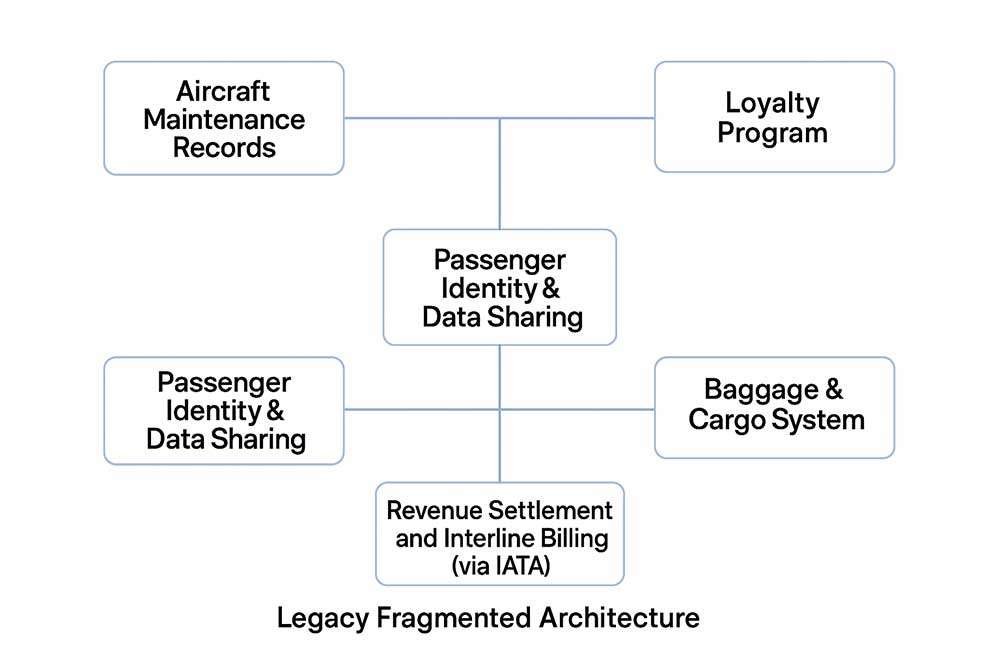
Here’s what typical airline software architecture looks like today:
- Passenger Service Systems (PSS)
- Departure Control Systems (DCS)
- Maintenance, Repair, and Overhaul (MRO) platforms
- Fuel management software
- Loyalty program databases
- Third-party integrations for GDS, payments, catering, etc.
Each system often comes from a different supplier, runs on different databases, and uses proprietary formats — leading to:
- Inconsistent data
- Security gaps
- Difficult integrations
- High cost of change
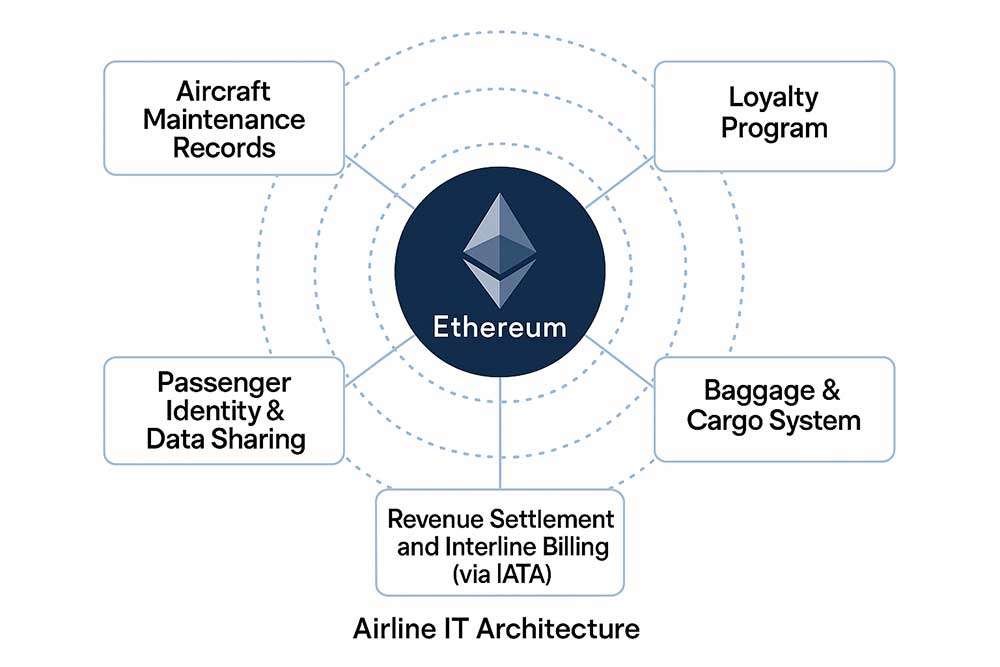
With blockchain, we design a unified platform that enables all departments and external partners to interact with a shared, decentralised ledger — without needing to replace every tool at once.
Key Use Cases for Blockchain in Aviation
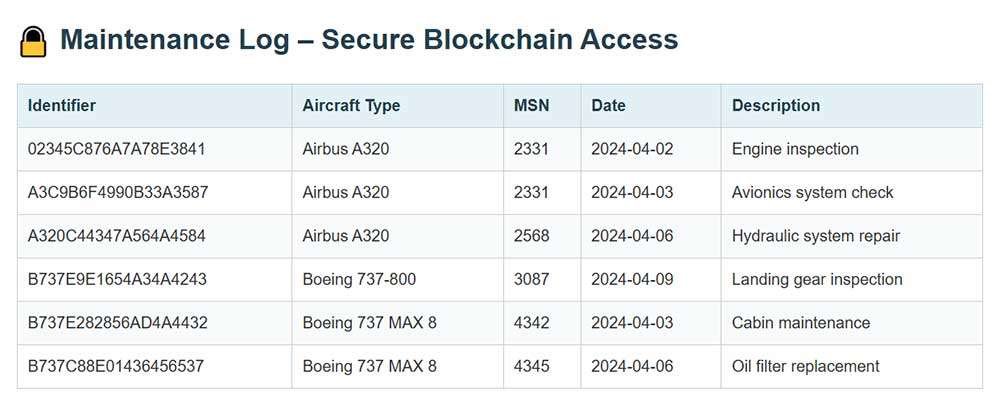
1. Aircraft Maintenance Records
Blockchain ensures complete, traceable, and tamper-proof maintenance logs that follow the aircraft throughout its lifecycle — from manufacturing to decommissioning.
- Real-time updates accessible by airlines, MROs, and regulators
- Smart contract verification of parts origin and service dates
- Faster lessor compliance during aircraft transfers
2. Loyalty Programs & Points Redemption
Blockchain can host a secure, multi-airline loyalty program that allows customers to earn and redeem points across partners with near-instant validation.
- Reduce fraud and double-spending
- Enable dynamic partnerships with hotels, travel agencies, and car rentals
- Automate redemption with smart contracts


3. Passenger Identity & Data Sharing
Create blockchain-based passenger IDs that comply with GDPR and protect privacy, while enabling seamless data sharing between:
- Airlines and ground handlers
- Immigration and customs
- Interline and codeshare partners
4. Smart Contracts for Baggage & Cargo
Replace manual agreements with automated smart contracts that trigger payments or processes upon arrival, scanning, or transfer events.
- Lower disputes and administrative costs
- Reduce lost cargo and mishandled baggage
- Provide transparent audit trails
5. Revenue Settlement & Interline Billing
Blockchain enables transparent and auditable revenue sharing between carriers in a codeshare or interline agreement.
- Real-time ticket tracking
- Elimination of data reconciliation delays
- Automated settlement via tokenised payments
How Dalmatian Group Delivers Blockchain Projects
Step 1: Architecture Assessment
We begin by evaluating your current software environment, vendor contracts, and integration pain points. Our consultants map dependencies and identify opportunities for decentralisation.
Step 2: Use Case Prioritisation
Not every system needs blockchain. We help you identify the high-impact areas where blockchain will offer ROI, reduce friction, or increase trust.
Step 3: Solution Design & Development
We design your blockchain architecture — using Ethereum, Hyperledger, or other frameworks — and develop smart contracts, APIs, and custom interfaces.
- Interoperability with existing legacy tools
- Scalable modular development
- Web3 readiness where needed
Step 4: Implementation & Training
We guide your IT team through integration, migration planning, and operational training. Optional co-development or full outsourcing available.
Airline Blockchain in Action: Example
A mid-sized airline with 50 aircraft relied on three separate systems for maintenance, flight scheduling, and part tracking. Dalmatian Group designed a blockchain solution that:
- Unified all aircraft records into a shared ledger
- Automated airworthiness compliance checks
- Enabled real-time access by internal and third-party MRO teams
Outcome:
- 35% faster compliance reporting
- 18% reduction in manual data entry
- Greater trust during leasing and resale transactions
Who We Work With
- IT and Innovation Teams at airlines
- Finance & Compliance Teams managing settlements
- Loyalty and Marketing Managers seeking program modernisation
- Fleet & Maintenance Teams needing traceability
- Start-up carriers building from scratch with a Web3-first mind-set
Why Dalmatian Group?
- Aviation-Specific Blockchain Expertise – Not just technologists, but airline specialists who understand the operational context
- Security-First Architecture – Cyber-resilience baked into every layer
- Interoperability Commitment – No forced rip-and-replace; we integrate and modernise
- Forward-Thinking, Practical Advice – Blockchain for real problems, not vanity projects
Future-Proof Your Airline Tech Stack
Blockchain is more than a new technology — it’s a new operating model. Let’s consolidate your fragmented systems into a unified, secure, and collaborative future.